In this article 7 sections
Last reviewed: 11 November 2026. Sources are linked in the text.
Selling bullion back is the other half of owning physical gold or silver. This guide covers the general mechanics that apply across the Canadian bullion market: how a buy-back price gets set, what paperwork and identification a dealer may require, why a coin’s condition changes the offer, and why a dedicated bullion dealer and a pawn shop or “cash for gold” jewellery store tend to land on very different numbers for the same item. It does not set out any single dealer’s current buy-back program or published rate; always check that dealer’s own current page before selling, since terms and pricing change.
How a dealer prices a buy-back
Most bullion dealers quote two numbers for the same metal at the same moment: a sell price if a customer is buying from the dealer, and a lower buy price if that customer is selling to the dealer. The gap between the two is the spread, and it is how a dealer earns a margin on volume rather than by paying far under market value. For standard, widely recognized bullion products, government mint coins such as the Gold or Silver Maple Leaf, and bars from well known refiners, a buy-back offer is normally pegged to the live bid side of the spot price at the moment of the quote, with the dealer’s own buy-back spread subtracted, rather than a fixed dollar figure set in advance. Spot moves throughout the trading day, so a quote is typically only good for a short window, sometimes just minutes, before the dealer has to requote.
Less common items get priced differently. Numismatic or collector coins, unusual bar brands, or anything a dealer cannot quickly resell into the wholesale market are not simply spot minus a standard spread, because the dealer is pricing resale risk and liquidity on top of metal content. Ask a dealer directly whether an item is being quoted as recognized investment bullion or as a harder-to-place piece.
This site has separately reviewed two dedicated bullion dealers that serve Canadian customers. Neither review is repeated here, and this guide does not assert specific sell-back numbers, fees, or minimum lot sizes for either of them. A dealer typically publishes its own buy-back or sell-back process, including any minimums, on its own site, and that page is the only reliable place to confirm current terms for a specific dealer on a given day.
What a dealer may ask for before buying bullion back
A dealer will commonly ask for the original receipt or invoice. This lets the dealer confirm purity, weight, and mint without further testing, and can speed up the quote and payout. A seller without the original paperwork can usually still sell, but should expect closer inspection and possibly a more conservative price while the dealer verifies the item.
A dealer may also ask for government-issued photo identification. This is not arbitrary. Canadian dealers in precious metals and precious stones (the federal regulator’s own term, often abbreviated DPMS) are a regulated sector under the Proceeds of Crime (Money Laundering) and Terrorist Financing Act (PCMLTFA), overseen by the Financial Transactions and Reports Analysis Centre of Canada (FINTRAC). A dealer becomes subject to these obligations once it engages in a purchase or sale of precious metals, precious stones, or jewellery of $10,000 CAD or more; a dealer that only ever transacts below that per-transaction amount falls outside the regime (FINTRAC, “Dealers in precious metals and stones,” checked 11 November 2026).
The rule most relevant to a seller handing over physical cash is FINTRAC’s guidance on large cash transactions, which defines one as receiving $10,000 CAD or more in cash in a single transaction. A reporting entity that meets the threshold above must file a Large Cash Transaction Report with FINTRAC whenever that happens, and must keep a large cash transaction record with identifying details. A related “24-hour rule” treats cash amounts below $10,000, received from the same person and adding up to $10,000 or more within a consecutive 24-hour period, the same way as a single large cash transaction (FINTRAC, “Reporting large cash transactions to FINTRAC,” checked 11 November 2026). “Cash” here means coins and bank notes; a payment by e-transfer, wire, or cheque is a different instrument and does not by itself trigger this particular rule, though a dealer’s own identity verification and record keeping may still apply regardless of how a seller is paid.
In practice, a seller handing over a large stack of bank notes should expect to show photo ID and have identifying details recorded once the $10,000 cash threshold is met, because the dealer is legally required to capture it. Many dealers also verify identity and keep records on smaller transactions as a matter of internal policy rather than legal obligation at that lower amount, so a seller should expect ID to be requested even on modest transactions and should not assume $10,000 is the only trigger.
Why condition and authenticity matter
A dealer buying bullion back has to resell it, and the next buyer, whether another dealer, an investor, or a collector, applies its own scrutiny. That makes condition and authenticity central to the offer a seller receives, not a minor detail.
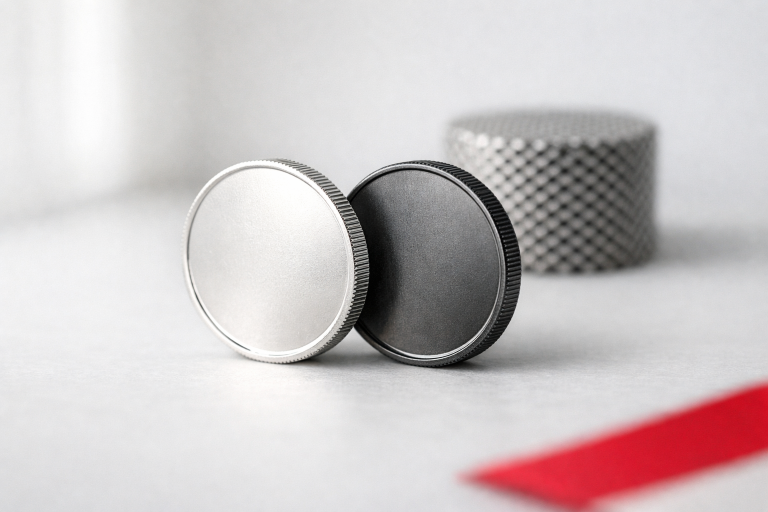
Modern government mint coins carry security features built in specifically to support authentication: fine radial lines, micro-engraved marks, and similar features a dealer checks as routine. A coin cleaned harshly, scratched, bent, or altered to the point those features are hard to read may be discounted relative to a problem-free example, and in some cases a dealer may decline to buy it rather than take on the resale risk. The same logic applies to bars: one still sealed in its original tamper-evident assay card is generally easier to verify and resell than the same bar with the card missing or the seal broken, and a dealer may price or treat the two differently.
A practical takeaway: keeping bullion in its original packaging, mint capsule, or assay card, and avoiding any cleaning beyond what is needed to store it safely, protects resale value later.
Dedicated bullion dealer versus a pawn shop or “cash for gold” store
Where a seller takes an item matters as much as the item itself. A dedicated bullion dealer buys and sells investment-grade coins and bars as its core business, competing on a tight bid and ask spread tied to the live spot price, because its plan for a coin or bar it buys back is usually to resell that same recognized item, largely unchanged, to another investor or into the wholesale bullion market. That model gives a dedicated dealer a direct incentive to offer a price reasonably close to current wholesale value, since an unjustified discount would just push sellers toward a competing bullion dealer.
A pawn shop or a jewellery store or kiosk advertising “cash for gold” generally operates on a different model, as a description of the business type rather than a claim about any specific store. Much of what comes through that kind of counter is scrap or mixed-purity jewellery bought primarily for melt value, often destined for a refiner, or priced for general resale margin rather than resale as recognized, intact investment bullion. Because its economics are built around melt value and margin rather than a tight bid and ask against spot, offers for the same metal weight there are generally lower than what a dedicated bullion dealer would pay for a recognized government mint coin or bar. This is a defensible general difference in business model, not an accusation against any named chain or store.
The practical implication: for a recognized bullion coin or bar, a seller is generally better served starting with a dealer whose core business is buying and reselling investment bullion, rather than a shop set up mainly to buy scrap for melt. Getting a quote from both before deciding costs nothing and makes the gap, if there is one, visible.
Practical steps before selling bullion back
- Check the live spot price for the metal before contacting a dealer, so a quoted buy-back figure can be compared against the market rather than taken on faith.
- Keep the original receipt or invoice, and the original packaging, capsule, or assay card, together with the item.
- Get more than one quote where practical, comparing a dedicated bullion dealer against any other type of buyer, before committing.
- Ask the dealer how its buy-back number relates to current spot, and confirm what identification it will require and how payment will be made.
- Avoid cleaning or polishing a coin or bar before selling; authentication works from original condition, and well-meaning cleaning can reduce rather than improve an offer.
Frequently asked questions
How is my buy-back price calculated?
For a standard, widely recognized bullion coin or bar, most dealers calculate a buy-back offer from the live bid side of current spot for that metal, less the dealer’s own buy-back spread, which is normally smaller than the spread applied on a purchase. The spread varies by dealer and product, and a quote is usually valid only for a short window because spot moves continuously. Numismatic, collector, or hard-to-verify items are priced on a different basis that accounts for resale risk and liquidity, so it is worth asking a dealer which basis applies before assuming a figure.
Do I need ID to sell gold or silver in Canada?
It depends on the amount and payment method, but a seller should assume ID may be requested at any transaction size. A Canadian precious metals dealer becomes a FINTRAC-regulated reporting entity once it buys or sells $10,000 CAD or more in a single transaction, and must file a Large Cash Transaction Report, and keep a record with identifying details, whenever it receives $10,000 CAD or more in cash in a single transaction, or in related cash amounts totalling $10,000 or more within a 24-hour period (FINTRAC, “Reporting large cash transactions to FINTRAC,” checked 11 November 2026). Below that threshold, many dealers still ask for photo ID as internal policy rather than legal requirement, so bring ID to any sale and confirm the dealer’s own requirement in advance.
Will a dealer buy back a damaged coin?
Possibly, but usually at a discount reflecting the damage, and in some cases a dealer may decline to buy the item at all. A coin that has been scratched, bent, aggressively cleaned, or altered to the point its security features are hard to verify is harder to authenticate and resell, and the offer, or the decision to make one at all, reflects that. Ask a dealer directly before assuming a damaged item will be accepted on the same terms as one in original condition.
Is it better to sell to a dealer or a pawn shop?
For a recognized government mint coin or bullion bar, a dedicated bullion dealer will generally offer a price closer to live bid or spot for that metal, because buying and reselling investment bullion at a tight spread is its core business. A pawn shop or “cash for gold” jewellery store generally prices against melt value and resale margin rather than a tight spread against spot, since much of what it buys is scrap or mixed-purity jewellery, and offers for the same metal weight are typically lower there. Getting a quote from each, rather than assuming either, is the most reliable way to see the difference for a specific item.
Sources
- Financial Transactions and Reports Analysis Centre of Canada (FINTRAC), “Dealers in precious metals and stones”, checked 11 November 2026.
- FINTRAC, “Reporting large cash transactions to FINTRAC”, checked 11 November 2026.
- FINTRAC, “Methods to verify the identity of persons and entities”, checked 11 November 2026.
About this byline
Gold in Canada is written by an editorial desk, not a single person. We are not advisers, and nothing here is personalized investment, tax or legal advice. Who writes this
Spotted an error? Tell us. We fix pages in place and say what changed.